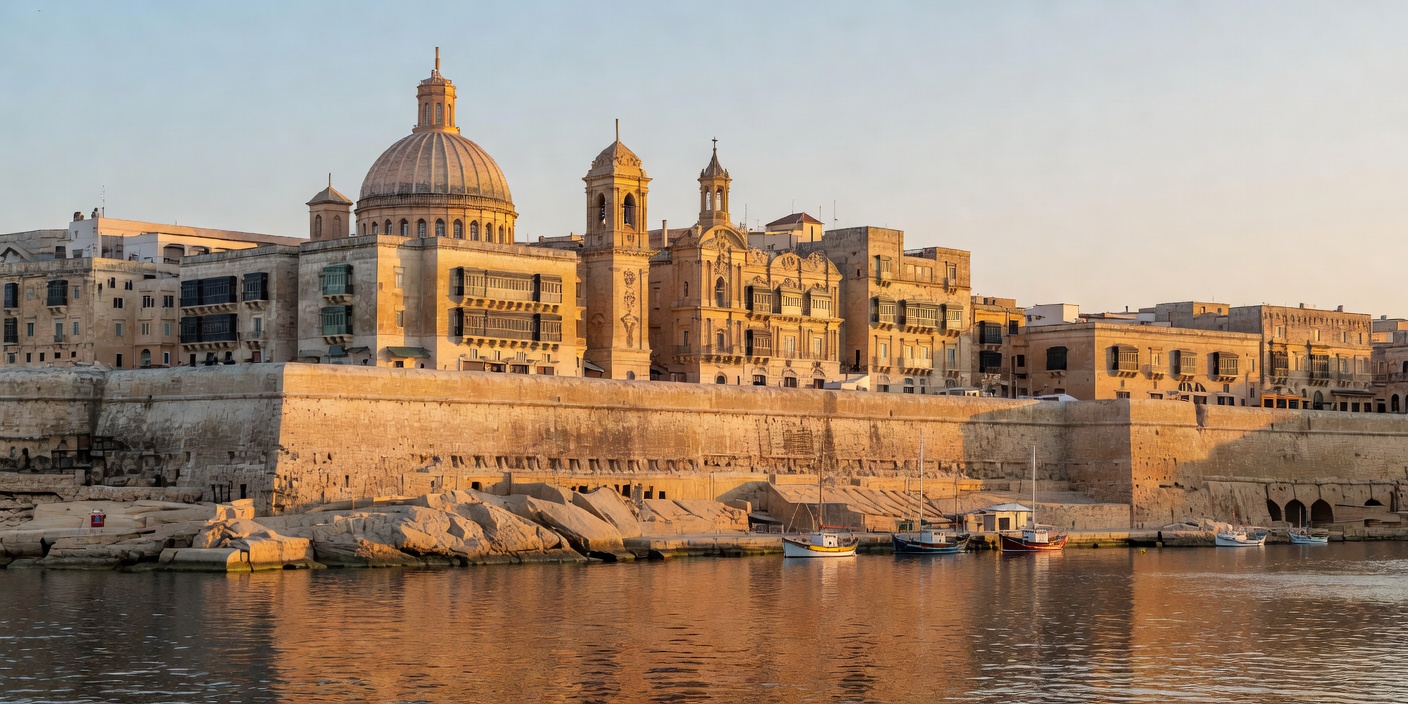
Perched high on the narrow Sceberras peninsula between Marsamxett Harbour and the Grand Harbour, Valletta was founded in 1566 by Grand Master Jean Parisot de Valette following the historic Great Siege. Conceived from the outset by military architect Francesco Laparelli as a fortified 'city built by gentlemen for gentlemen', Valletta represents one of the earliest planned grid-iron cities in Europe.
The Geology of Globigerina Limestone
Virtually every historical structure across the Maltese islands—from the colossal bastions of Mdina to the noble townhouses along Merchants Street—is quarried from Lower Globigerina Limestone. This unique golden stone possesses a tactile softness when fresh from the quarry, allowing master masons to chisel ornate coats of arms, scalloped shells, and florid baroque window frames with precision.
As the stone oxidizes under the harsh Maltese sun, it forms an enduring outer patina that deepens into rich honey and amber tones. Within luxury properties such as Rosselli AX Privilege and The Xara Palace, interior walls have been stripped back to expose the naked golden masonry, connecting modern guests directly to the artisan work of 17th-century stonecutters.
From Military Citadel to Luxury Sanctuaries
For centuries, the massive curtain walls, cavaliers, and naval complexes served strictly defensive purposes. In Senglea, the sheer mass of Cugó Gran Macina was constructed to withstand artillery barrages and support the heavy mechanical cranes needed to outfit war galleons. Today, the repurposing of these fortresses into boutique sanctuaries demonstrates how adaptive reuse can preserve national heritage while providing the world's most intimate five-star hospitality.
The Phoenicia Malta
Valletta Gates • 7.5 Acres of botanical sanctuary and Art Deco splendor.
Read Architecture Profile →Rosselli AX Privilege
Valletta Centre • 17th-century knight's palazzo with Michelin dining.
Read Architecture Profile →The Xara Palace
Mdina Citadel • Aristocratic Relais & Châteaux inside the Silent City.
Read Architecture Profile →Cugó Gran Macina
Grand Harbour • 1554 naval fortress with rooftop marina terrace.
Read Architecture Profile →The Evolution of Michelin Gastronomy in Malta
In recent years, Malta's culinary landscape has undergone an extraordinary renaissance. The Michelin Guide recognized the island with its dedicated guide, celebrating chefs who source seafood from local Marsaxlokk fishermen, seasonal Gozo honey, Maltese capers, and sun-ripened tomatoes. Venues like Under Grain at Rosselli and de Mondion at The Xara Palace showcase how historic stone vaults and bastion lookouts elevate modern gastronomy into multi-sensory experiences.